Harmony Hammond Wrote the Book on Lesbian Art 20 Years Ago. Here’s What Comes Next.
By By Ella Martin-Gachot
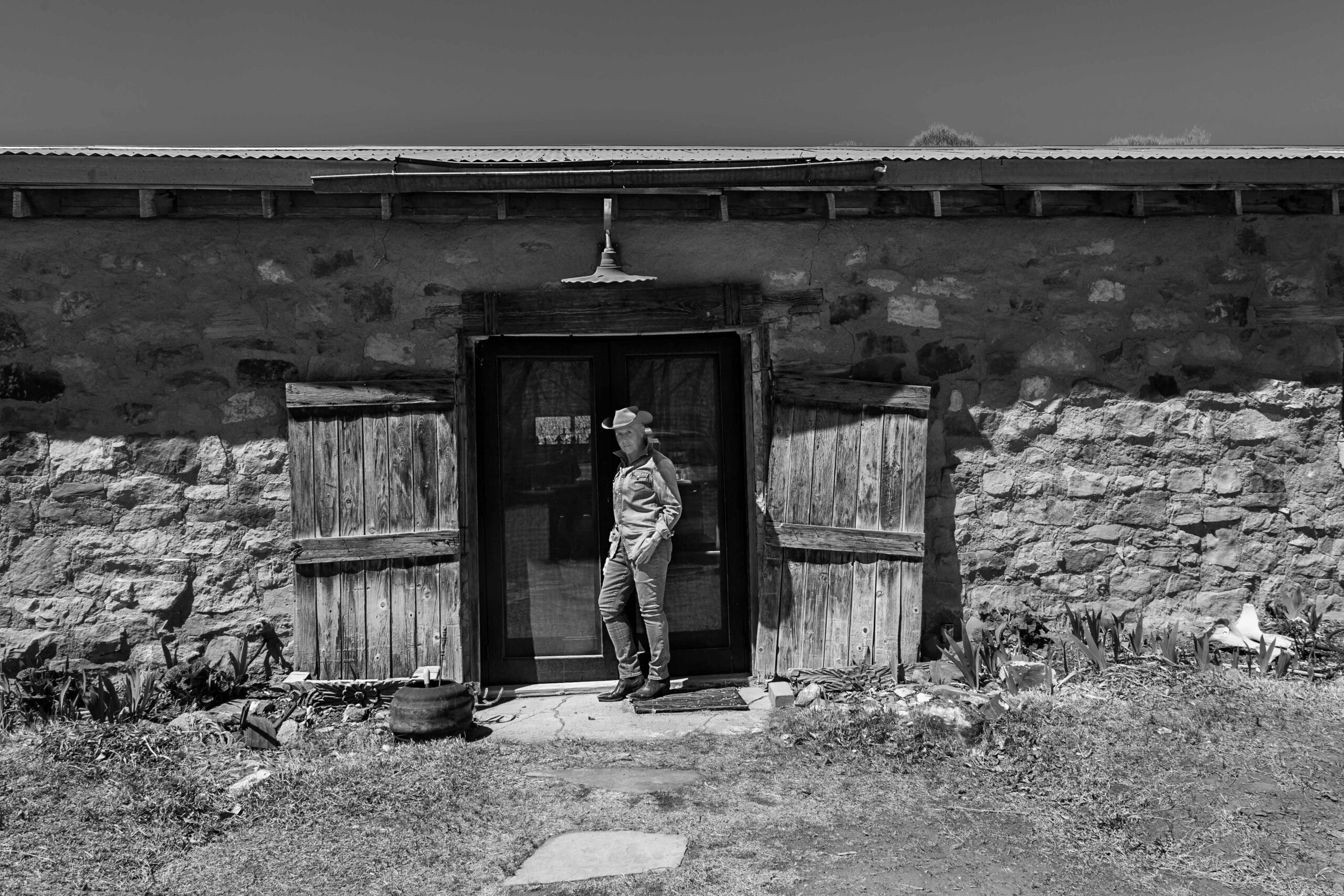
Harmony Hammond, 82, is the rare figure to have both earned renown as a contemporary artist and had a hand in how the movements of her time are remembered in art history. Her sculptures and canvases have given textiles a new remit in the world of abstraction, while her texts—Lesbian Art in America: A Contemporary History and Wrappings: Essays on Feminism, Art and the Martial Arts among them—remain unparalleled in their juxtaposition of identity politics, art criticism, and feminism as a lived experience.
A volume dedicated to her life in words, Still Dangerous! The Harmony Hammond Reader, will release this August, and her seventh solo exhibition with Alexander Gray Associates, “Rust Never Sleeps,” will open June 5 in the gallery’s new Tribeca space.
We’re going to speak a good deal about the past and the arc of your career. But I’m wondering if you can tell me what you’re sitting with these days. What are you working on? What are you mulling over?
I’m glad that we can deal a little bit with the present, because I get very tired of talking about the ’70s as I am alive and working today for better or worse. I’m extremely busy with exhibitions, some that have been important ahistorical and transnational exhibitions. A lot have been focusing on the history of textile in relationship to modernist painting. I’m thinking of the “Woven Histories” exhibition that Lynne Cook curated. There was also “Unravel,” which opened at the Barbican then traveled to the Stedelijk Museum. It’s interesting that the word is now textile. In the ’70s, we talked about fabric and cloth, not textile. I just see this all as a really great, long overdue conversation.
And now, I’m getting ready for a show in New York at Alexander Gray. I’m busy trying to finish work, because I guess I work slowly compared to some other artists. Alex, my dealer, jokes about it and says, “artists who work slowly like you,” and I go, “I don’t work slowly, I’m always working.” It takes a long time because I work with materials and process; I don’t start from a sketch or something. The practice of making the work evolves out of the handling of the materials. There are threads of concerns and ideas in the work, but I don’t really know where I’m going when I start out. It keeps me engaged and on my toes, but it also takes time. I also tend to work with very layered materials, specifically what looks like thick oil paint. It’s not about putting down a thick surface all at one time; it is very much about notions of accumulation and layering. This notion of accumulation over time gets performed through the materials in my process.
Aside from the painting practice, we’re very involved with the last stages of Still Dangerous! The Harmony Hammond Reader the Duke University Press is publishing this fall. It’s a compilation of all kinds of texts, articles or interviews or lectures or artist statements from exhibition as well as unpublished material. I think there’s a real audience for the volume. I can’t tell you how frequently I get inquiries, especially from art historians who are doing their dissertations on my work, or my work in conjunction with several other artists whose works are involved with similar issues. They’re writing new histories, and we need that all the time—new ideas, new readings. Otherwise it’s just history.
You are not the rare artist to also be a writer, but not every artist is comfortable with writing, and you have published extensively. How do you balance the two practices, and how do you see them as connected?
The writing and the visual practice are kind of separate for me. One, I do them in different places. I don’t write about art in my studio. But also partially because I’m so focused on what the materials can do I’m not even outside of myself thinking about what I’m doing means because I don’t think that’s good for making art.
Yeah, there’s a place for that interpretation, but it’s still not about writing at all. I like to work maybe four or six hours at a time in the studio, and as I’m beginning to wind down, I might sit down in one of my chairs in the studios, and just kind of look, like, Whoa, what have I got here? I’m really just trying to look at what’s there, what is the work suggesting? Then, I can choose to go this or that direction. I can underscore, elaborate, eliminate, and begin to develop the work both visually as well as content-wise. I’m very interested in how I bring content into the world of abstraction, and that space between the actual physical doing and looking at what the materials and I have done in conversation. It’s really about listening. Unlike a lot of artists, I rarely put the radio or music on in the studio. I really like listening to the sound of my own thoughts. I think part of that is, having been a professor for so long and a single mother, there’s always somebody talking.
I’m very aware that in most cases, my writing does not correspond directly to works I am making. Obviously, they’re happening at the same time, and nothing is totally isolated from anything else. But very few artworks really reflect my writing. There is one exception. After working for a decade on the book Lesbian Art in America: A Contemporary History, I was making some pieces where I had the opportunity to cast in bronze. It’s not a material that I normally work in, but like all artists, when we have an opportunity to do something different, we always jump at it. So I made a series of bronze heads that were cast from my head but then the waxes I carved back into. It’s conceptually important that they came from me, but not that they look like me. One of the pieces was called Speaking Braids, a cast of my head and face that hangs high on the wall. Her eyes are open, out of her mouth comes a hemp braid that goes all the way down to the floor, where it kind of circles around a slab of wax, the kind of wax that you use to cast in bronze, that looks like a book-like slab. So it kind of represents Lesbian Art in America. The braid is both life breath but also words, text. It’s a braid of histories that’s unfinished because lesbian art history is unfinished. And out of the corner of her mouth, there’s a little bit of bloodshed. Because whenever you put yourself out there as an artist and as an activist, a little blood is always shed.
Looking back very far in the in the past, I wonder if you can tell me a little bit about your first encounters with art and when you first saw yourself as an artist.
Somehow, growing up in lower middle class Midwestern America, I must have gotten some kind of approval for the artwork that I did. But the main thing I know that had a huge effect on me has to do with my high school art teacher, whose name was Berta Caul. Teachers are so important. I lived in Hometown, Illinois, on Main Street, very generic; we got bused over to Oak Lawn for high school. Berta was a wonderful art teacher. She also taught at the Saturday school at the Art Institute of Chicago, so once a year she would take us on a field trip to the Art Institute. Boy, did we think we were pretty hot shit.
Once a year, as the advisor for the Arts Club, Berta would host a competition; whoever won got to take a free class in the Saturday school at the Art Institute. I won. It was life changing for me. So in my senior year, I would take the elevated train down to downtown Chicago by myself. I would go into the bowel of the museum where the art school was; I took dress design and fashion illustration so it would make me sophisticated and classy. I just loved it. After my class, I wandered around all the other studios down there in the basement. I walked into life drawing classes with new models and still-life classes. I saw all these students who, in those days, were beatniks. I decided right then I would be one of them. Then I went forward into college and majored in art but I had already claimed the label of artist.
1969 in the fall, which would’ve been after Stonewall in June and the beginning of the women’s liberation movement. It was a very political time in New York. There was still civil rights activism going on and Vietnam War stuff going on. I entered the downtown art scene, where some of the artists were doing very political art and many of them were not but they were political. It was a time of tremendous experimentation with materials and what was being considered fine art. And hardly anybody was showing, and nobody was making money.
You were coming of age as an artist in such a dense period both politically and artistically. How has your idea of what art can and can’t do evolved over the ensuing decades?
Both the work itself but also all the things that artists do around the work have had tremendous effect. If we talk about the early feminist art movement in New York, for example, it created huge change. Do we have total equity between artist men and women today? No, but there is huge change. When we formed A.I.R., the idea was to have an exhibition space where we as women could show what we wanted, when we wanted, how we wanted. Very few women were in museum shows or gallery exhibitions and certainly not represented by galleries. So we formed our own. That was a radical gesture at the time. Things that we take it for granted, like working with fabric or textile, had a radicality to it if you did it in 1972; it doesn’t have the same radicality today. We created a space where people saw our work. If the work’s not visible, no one can relate to it. It’s that simple: You have to have a way to show the work. Almost all the shows that first year at A.I.R. got written up. In my case, the visibility that the writing about brought, got me invitations to come and speak as a visiting artist. My first gig was at the Art Institute of Chicago. I was a replacement for Vito Acconci, who canceled. They came for Vito; they got Harmony.
And after I’d speak about my work, I would also meet with groups of women that might be like in a Women’s Studies Program, or just the women graduate students, or a group of women artists off campus somewhere. I always came with slides of work by other feminist artists and all the other members at A.I.R. We had a huge effect on inspiring feminist cooperative galleries in Chicago. I also know that while I was traveling around, lecturing and so forth, I was looking at all this other work by mostly feminist artists. So by the time I got to working on Lesbian Art in America, which took me 10 years to write, I had a network. All my research for the book was physical writing and 35 mm slides that the artists themselves gave me. I have tremendous archives that are luckily at the Getty Research Institute. But it all started because I was able to show my work at A.I.R. in New York in January 1973.
You’re mentioning Lesbian Art in America, which obviously is a seminal work. It was the first of its kind. Many other books have come after it, but nothing has ever taken its place. So much has changed in queer culture, lesbian culture, art-making, how we speak about art. How do you think about the book’s legacy? And how has your understanding of lesbian art evolved since its publication in 2000?
That’s a huge question that requires a book in response. I’ll tip around the edges a little bit. One of the reasons it still has that currency to it 26 years later is that I I never have had a narrow vision of what constitutes feminist art or lesbian art or queer lesbian art. It never had an essentialist approach to it. I write about a much broader connecting of the idea of lesbians in art. That was both criticized when the book came out by people who wanted something more definite that they could accept or reject. But I also think it’s still relevant today, precisely for the same reasons. Queerness and the various ways that it has gotten represented in the arts has expanded exponentially. I like to think that Lesbian Art in America contributed to that in some way. And someone else needs to do a new book.
What do you think has been the single greatest challenge of your career?
Time and money. We just never have enough time to do it all. And as any creative person, I resist labels that are confining, but at the same time, I’m willing to take on different labels because they do give some information. I try to redefine those labels on my own terms and not make them exclusive. So I’m willing to take the label artist, painter, lesbian, feminist, queer, but I’m not going to accept them as limitations. They co-exist, and sometimes one thing is more apparent than the other. They’re just part of the space from which I work. Other limitations: ’70s artist, New York artist, American artist. What do all of those mean? All art participates in multiple narratives.
Young artists have absorbed various art histories, feminist art histories, and it’s just there. That’s part of how effective it’s all been. I was talking about what’s a radical idea, a radical formal gesture, a radical conceptual gesture… things that are taken for granted now.
I don’t have a quick answer for that. When people ask me what I’m looking at today, you know, I’m primarily a painter, but most of the work really occupies a space between painting and sculpture. I actually like sculpture more than most painting, and that can be traditional sculpture like Brâncuși or Picasso, or it could be somebody like Martin Puryear, Eva Hesse, Louise Bourgeois, Nicole Eisenman, or Wangechi Mutu. I think Martin Puryear’s probably the best living sculptor today. I don’t know why I’m so drawn to sculpture; it has something to do with notions of presence and how you occupy space.
The fantastic thing about sculpture is also that it resists being captured in a way. You have to be with it in the space; it’s hard to photograph sculpture.
It’s not an image that you just look at in most cases. For any artwork, but especially with sculpture, it’s about how it’s felt on the body. That’s how I want people to look at my paintings. I just want you to feel the painting on your body first. That’s kind of how I define the notion of presence, the idea of filling a space that is larger than its physical space. A lot of painting just doesn’t do that because it’s about image-making.
You also have a martial arts practice, which is very much about being in your body and discipline. How has your relationship to the physicality of making art changed over the years?
There’s an indexical presence within all the work I’ve made over the years. The very making of the painting is present in the painting itself. I began studying martial arts soon after I moved to New York. I started to study first tai chi chuan, then later aikido, for 36 years. It was like a physical enactment of the Women’s Liberation Movement. What was it partially about? Women taking up and occupying space. What was I doing in martial arts? Taking up and occupying space. I had a non-gendered way of physically enacting the concepts which were changing my lif
This article was originally published by Cultured Magazine.
