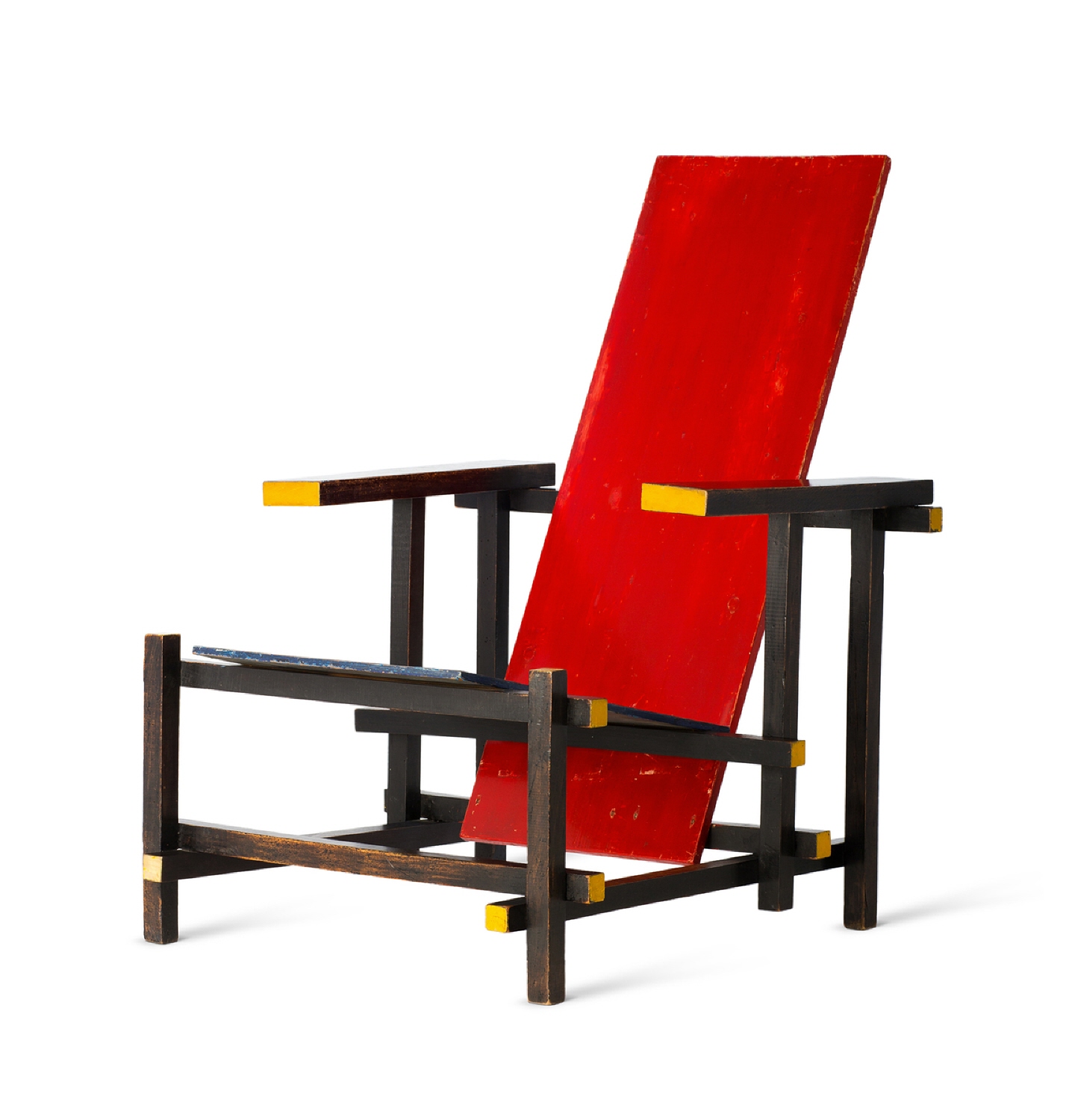
Red Blue Chair
The Dutch architect and cabinetmaker Gerrit Thomas Rietveld designed a precursor to his famous Red Blue Chair in 1918/19. He submitted this model, which was still unpainted, to the exhibition Aesthetisch uitgevoerde gebruiksvoorwerpen (Aesthetically Produced Utensils) at the Museum for Applied Arts in Haarlem, which included a competition for a simple lounge chair that could be manufactured for less than 35 guilders.The chair is composed of thirteen thin slats forming the rails and posts, two thicker slats for the armrests, and two rectangular boards for the back and seat. The most striking thing is that the rails and posts extend past the point where they are joined. The result is an open spatial composition, corresponding to the principles of the De Stijl movement, of which Rietveld was a member. Designs by Frank Lloyd Wright and Rietveld’s tutor P.J.C. Klaarhamer are often mentioned as sources of inspiration.Probably influenced by De Stijl, Rietveld painted his furniture from the 1920s. The first mention of a coloured version of the Red Blue Chair dates from 1923. Its colour scheme reinforces the original design, in that the seat and back are more clearly recognizable as separate elements and the yellow cross-cut ends of the slats accentuate the three-dimensional interplay of the lines. With the revival of interest in the De Stijl movement in the 1950s, this version of the chair became an icon of twentieth-century design. Kuper, Marijke, and Lex Reitsma, De Stoel van Rietveld/Rietveld’s Chair, Book + Film (Rotterdam: nai010 Publishers, 2011), 38. Doesburg, Theo van, ‘Aantekeningen bij een leunstoel van Rietveld’, De Stijl, 2/11 (September 1919), 133, Appendix XXII. Ibid. Zijl, Ida van, ‘De Stijl as Style’, in Zijl, Gerrit Rietveld (2010), 226–49.Text: Ida van Zijl
Catalogue
- Year
- 1918
- Dimensions
- 86 x 65,8 x 82 cm
- Artist
- Gerrit Rietveld
Artist

Furniture
Gerrit Rietveld (24 June 1888 – 25 June 1964) was a Dutch furniture designer and architect. Early life Rietveld was born in Utrecht on August 1888 as the son of a joiner. He left school at 11 to be apprenticed to his father and enrolled at night school before working as a draughtsman for C. J. Begeer, a jeweller in Utrecht, from 1906 to 1911. De Stijl By the time he opened his own furniture workshop in 1917, Rietveld had taught himself drawing, painting and model-making. He afterwards set up in business as a cabinet-maker. Rietveld designed his Red and Blue Chair in 1917 which has become an iconic piece of modern furniture. Hoping that much of his furniture would eventually be mass-produced rather than handcrafted, Rietveld aimed for simplicity in construction. In 1918, he started his own furniture factory, and changed the chair's colours after becoming influenced by the De Stijl movement, of which he became a member in 1919, the same year in which he became an architect. The contacts that he made at De Stijl gave him the opportunity to exhibit abroad as well. In 1923, Walter Gropius invited Rietveld to exhibit at the Bauhaus. He built the Rietveld Schröder House, in 1924, in close collaboration with the owner Truus Schröder-Schräder. Built in Utrecht on the Prins Hendriklaan 50, the house has a conventional ground floor, but is radical on the top floor, lacking fixed walls but instead relying on sliding walls to create and change living spaces. The house has been a UNESCO World Heritage Site since 2000. His involvement in the Schröder House exerted a strong influence on Truus' daughter, Han Schröder, who became one of the first female architects in the Netherlands. Nieuwe Zakelijkheid Rietveld broke with De Stijl in 1928 and became associated with a more functionalist style of architecture, known as either Nieuwe Zakelijkheid or Nieuwe Bouwen. The same year he joined the Congrès Internationaux d'Architecture Moderne. From the late 1920s he was concerned with social housing, inexpensive production methods, new materials, prefabrication and standardisation. In 1927 he was already experimenting with prefabricated concrete slabs, a very unusual material at that time. In the 1920s and 1930s, however, all his commissions came from private individuals, and it was not until the 1950s that he was able to put his progressive ideas about social housing into practice, in projects in Utrecht and Reeuwijk. Rietveld designed the Zig-Zag Chair in 1934 and started the design of the Van Gogh Museum in Amsterdam, which was finished after his death. De Stijl revival In 1951 Rietveld designed a retrospective exhibition about De Stijl which was held in Amsterdam, Venice and New York. Interest in his work revived as a result. In subsequent years he was given many commissions, including the Dutch pavilion for the Venice Biennale (1953), the art academies in Amsterdam and Arnhem, and the press room for the UNESCO building in Paris. Designed for the display of small sculptures at the Third International Sculpture Exhibition in Arnhem's Sonsbeek Park in 1955, Rietveld's 'Sonsbeek Pavilion' was rebuilt at the Kröller-Müller Museum in 1965. Due to irreparable damages caused by regular decay, it was once again rebuilt, this time with new materials, in 2010. In order to handle all these projects, in 1961 Rietveld set up a partnership with the architects Johan van Dillen and J. van Tricht built hundreds of homes, many of them in the city of Utrecht. His work was neglected when rationalism came into vogue, but he later benefited from a revival of the style of the 1920s thirty years later. Death Rietveld died on 25 June 1964 in Utrecht. His son Wim Rietveld also became a renowned industrial designer. Recognition Rietveld had his first retrospective exhibition devoted to his architectural work at the Central Museum, Utrecht, in 1958. When the art academy in Amsterdam became part of the higher professional education system in 1968 and was given the status of an Academy for Fine Arts and Design, the name was changed to the Gerrit Rietveld Academy in honour of Rietveld. "Gerrit Rietveld: A Centenary Exhibition" at the Barry Friedman Gallery, New York, in 1988 was the first comprehensive presentation of the Dutch architect's original works ever held in the U.S. The highlight of a celebratory "Rietveld Year" in Utrecht, the exhibition "Rietveld's Universe" opened at the Centraal Museum and compared him and his work with famous contemporaries like Wright, Le Corbusier and Mies van der Rohe. Two software tools, both for code review, have been named after Gerrit Rietveld: Gerrit and Rietveld.
Full artist profile →More
More by Gerrit Rietveld
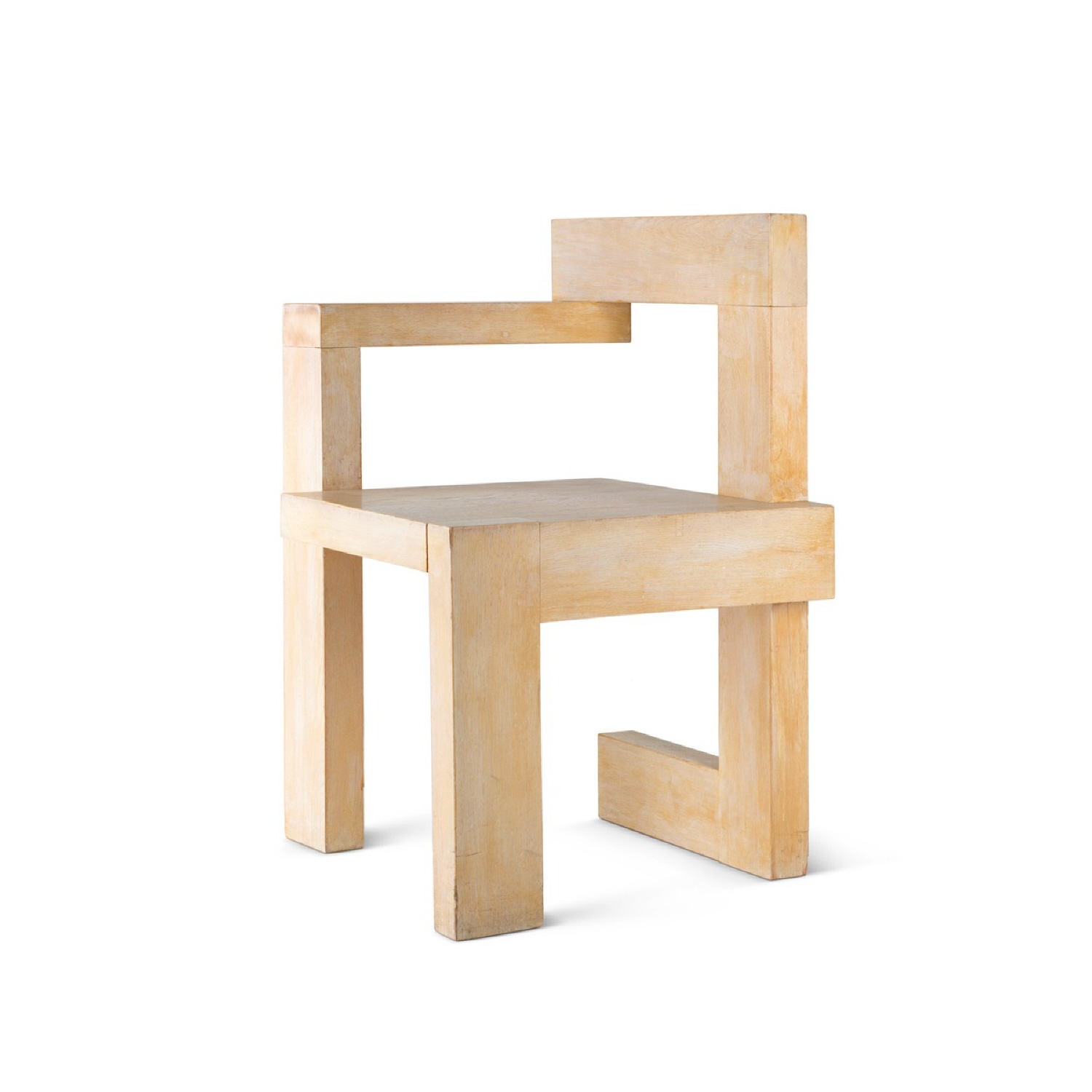
Steltman
1963 · Oak
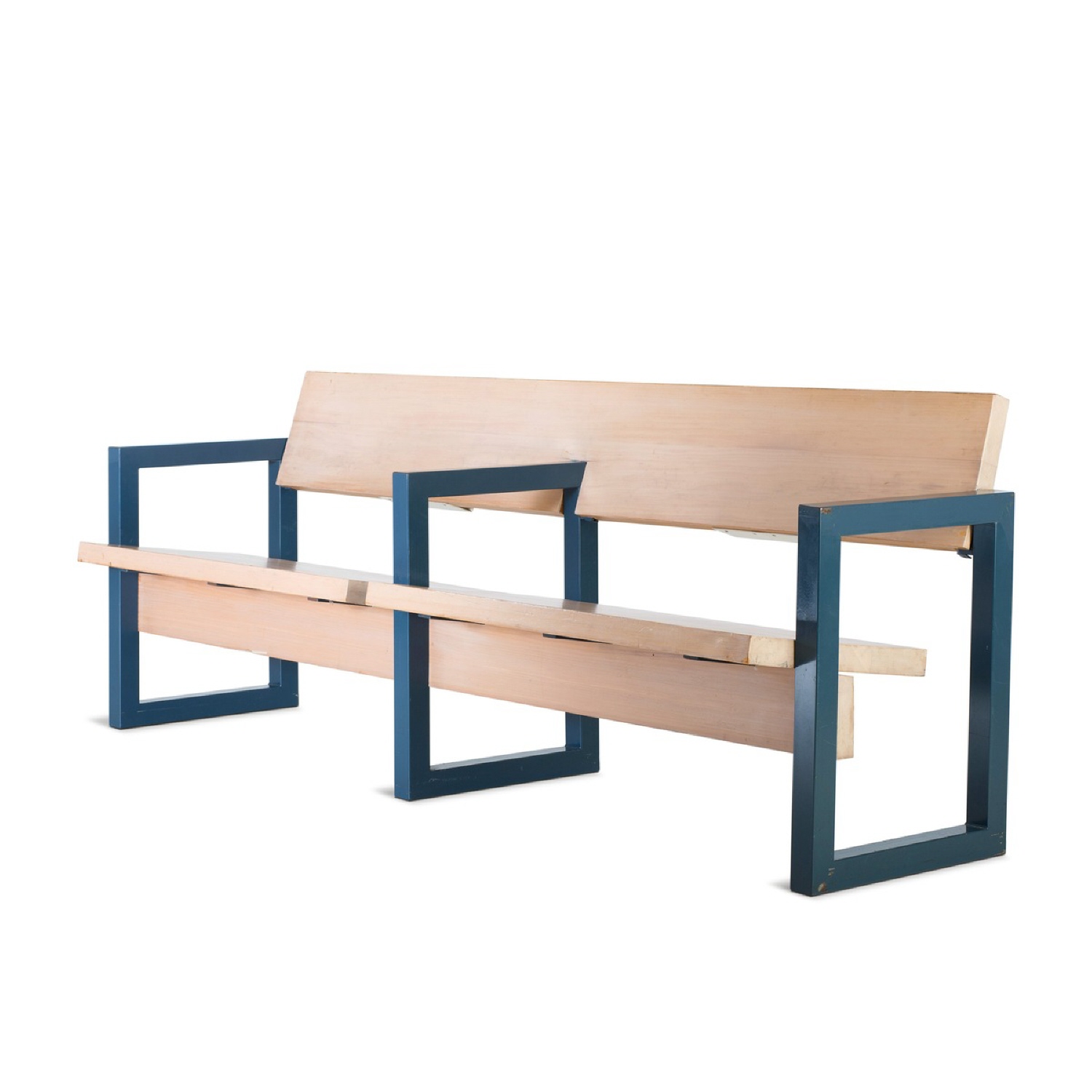
Bench for De Hoeksteen Church, Uithoorn, NL
1963 · Lacquered steel / parana pine
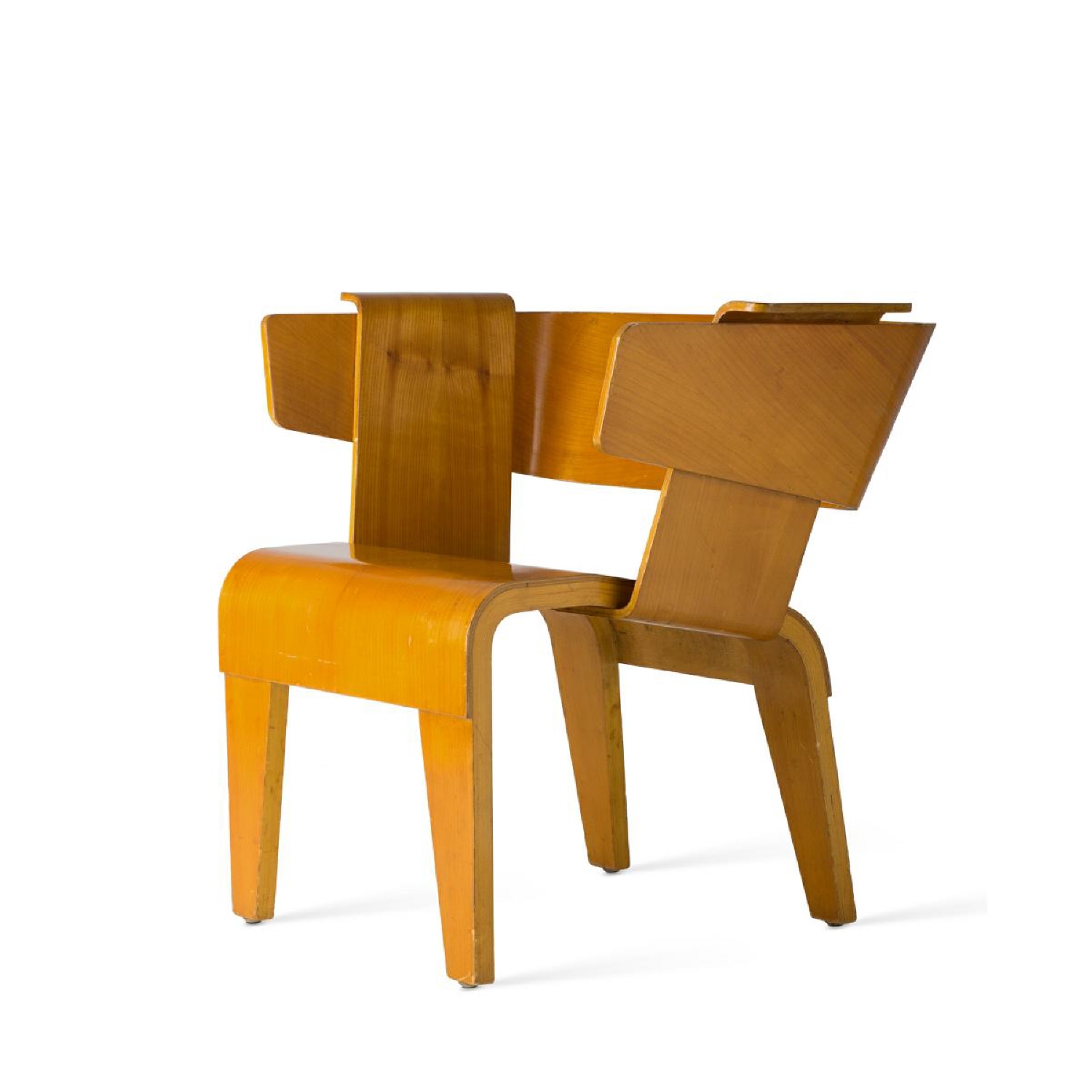
Danish Chair
1950 · Bent plywood
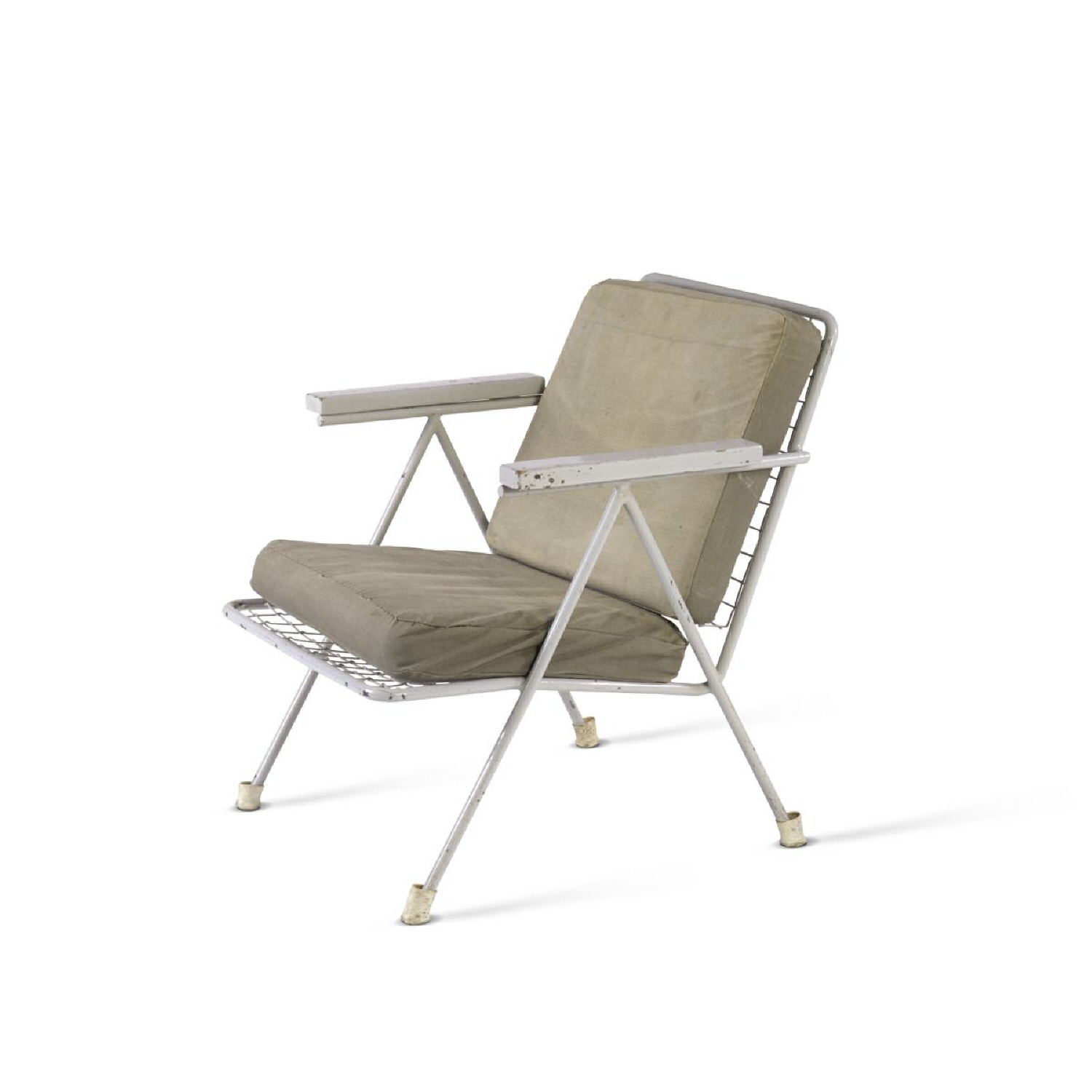
Untitled / Amersfoort chair
1949 · Lacquered tubular steel / lacquered steel wire / lacquered wood / fabric covering
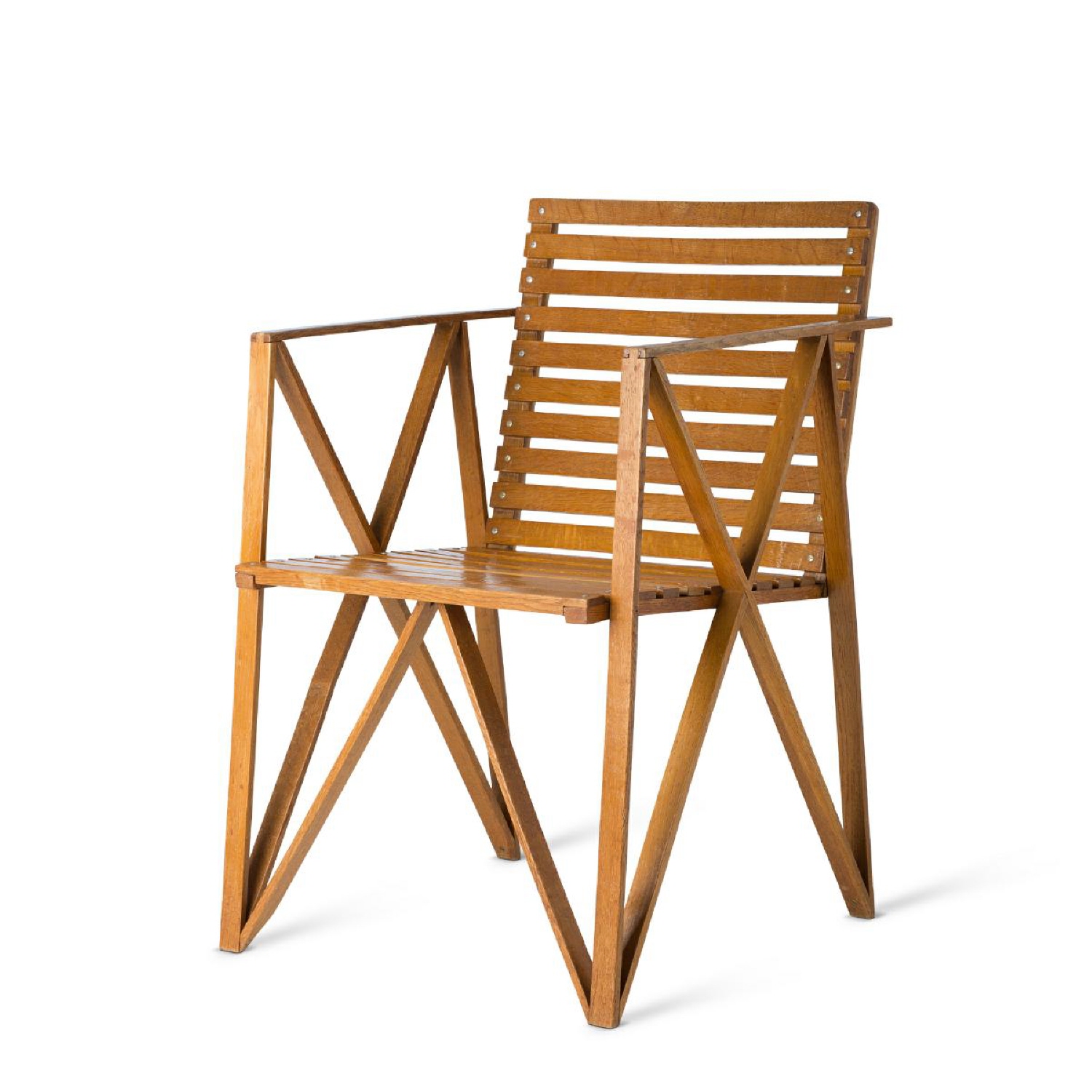
Untitled
1942 · Oak
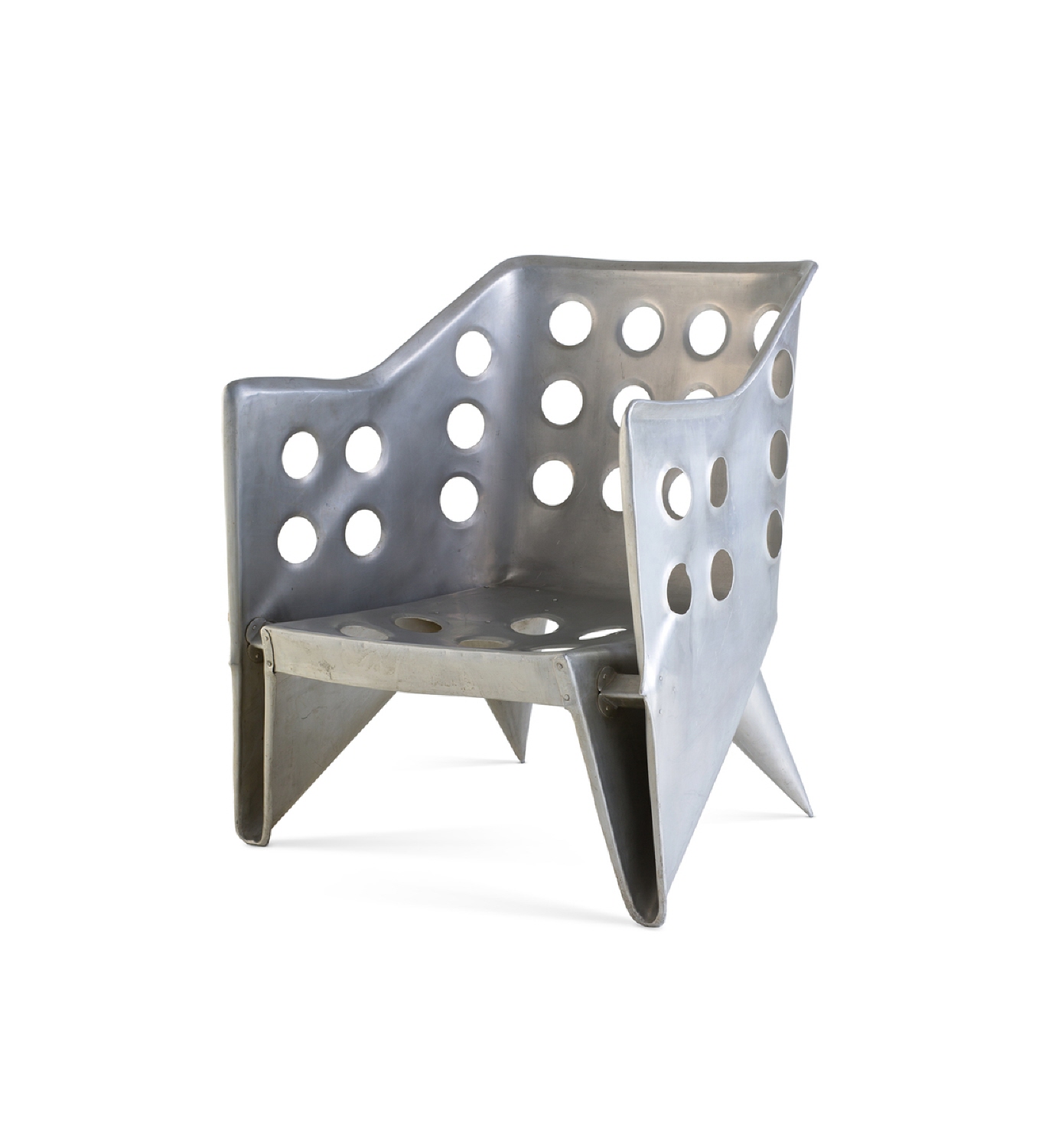
Untitled / Aluminium Chair
1942 · Sheet aluminium
Record
Verified by WattsOS- Artist
- Gerrit Rietveld
- Year
- 1918
- Dimensions
- 86 x 65,8 x 82 cm
- Watts ID
- WW-1918-vt43128
Source
- Source
- museum_vitra
- Reference
- View at source
- Status
- verified