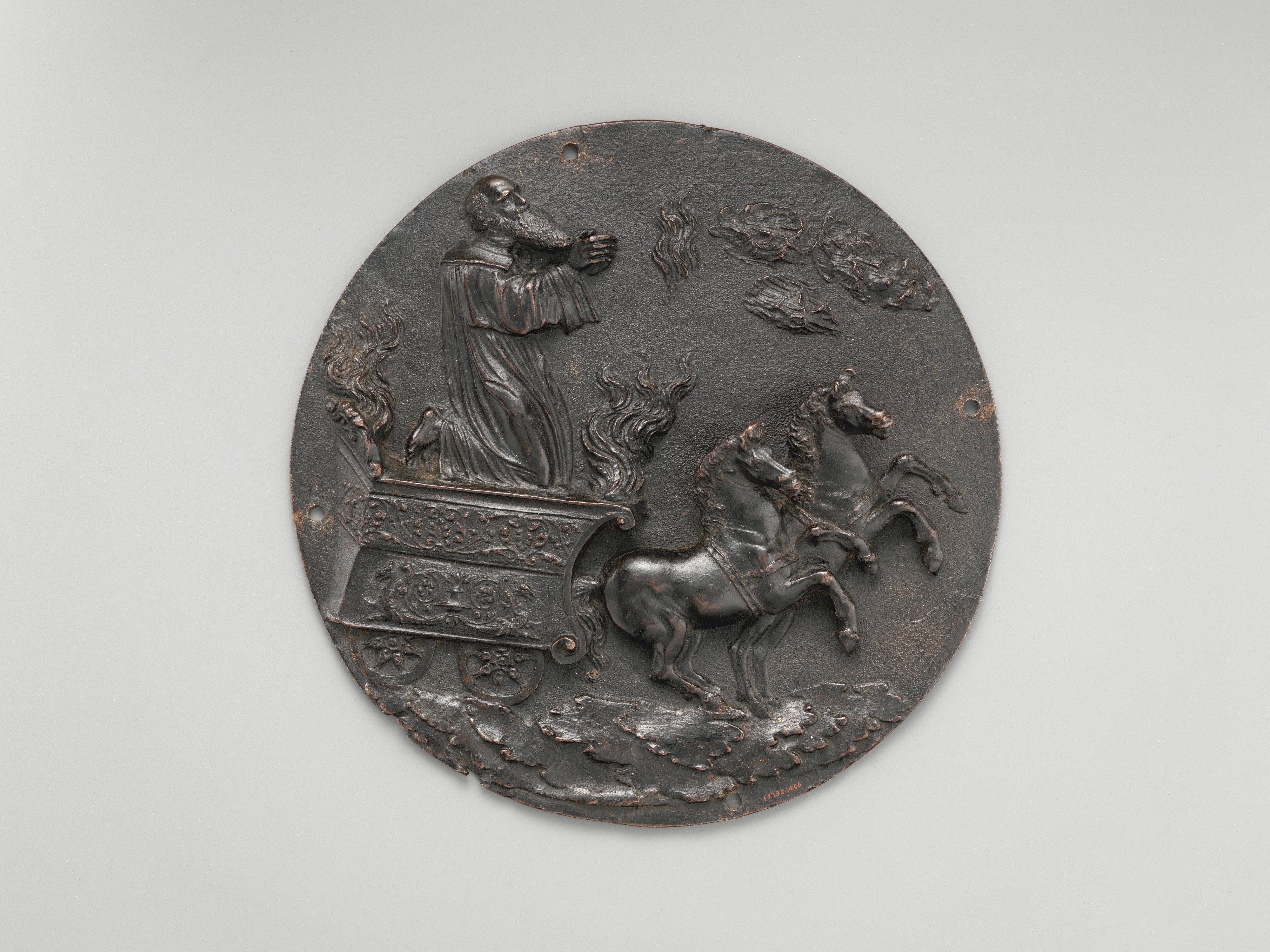
Elijah in the Fiery Chariot
Gift of J. Pierpont Morgan, 1917
Catalogue
- Year
- 1515
- Dimensions
- Diameter (confirmed): 9 1/4 in. (23.5 cm)
- Collection
- The Metropolitan Museum of Art
- Artist
- relief
Artist

Relief is a sculptural method in which the sculpted pieces remain attached to a solid background of the same material. The term relief is from the Latin verb relevare, to raise. To create a sculpture in relief is to give the impression that the sculpted material has been raised above the background plane. When a relief is carved into a flat surface of stone or wood, the field is actually lowered, leaving the unsculpted areas seeming higher. The approach requires chiselling away of the background, which can be time-intensive. On the other hand, a relief saves forming the rear of a subject, and is less fragile and more securely fixed than a sculpture in the round, especially one of a standing figure where the ankles are a potential weak point, particularly in stone. In other materials such as metal, clay, plaster stucco, ceramics or papier-mâché the form can be simply added to or raised up from the background. Monumental bronze reliefs are made by casting.
Full artist profile →Record
Verified by WattsOSSource
- Collection
- The Metropolitan Museum of Art
- Source
- met
- Reference
- View at source
- Status
- verified